
 Photoshop
 Maya
Maya Houdini
 Unreal Engine
 Substance Painter
 Blender
 Nuke
Nuke Arnold
 KeyShot
 V-Ray
V-Ray Mari
Mari Marvelous Designer
 Marmoset Toolbag
 Substance Designer
 3ds Max
 3DCoat
 Redshift
 After Effects
 Faceform Wrap
 Lightroom
 OctaneRender
 SpeedTree
 Daz 3D
 Agisoft Metashape
 Fusion
 Modo
Modo RealityCapture
 Gaea
Gaea Cinema 4D
 Gravity Sketch
 Premiere
 Procreate
 Substance 3D Modeler
 Katana
 Mudbox
 Krita
Krita World Creator
 Yeti
Yeti Ziva VFX
 SketchBook
 Quixel DDO
 Mixamo
 Natron
 Quixel Bridge
 Quixel Megascans
 Adobe Medium
 Quixel Mixer
 SynthEyes
 Clip Studio Paint
 SketchUp
 Unity
Unity Gaffer
 Massive
 Materialize
 Ornatrix
 PreForm
 Corel Painter
 Moi 3D
 QuickTime
 Storyboard Pro
 TreeIt
 animBot
 ReCap
ReCap Meshmixer
 DaVinci Resolve
 World Machine
 xNormal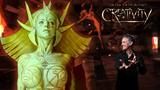







This workshop offers a comprehensive introduction to ZBrush by Maxon, designed to take artists from complete beginner to a confident intermediate sculptor, painter, and creative problem solver.
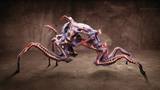
Madeleine Scott-Spencer begins with a quick-start lesson that guides artists through navigating the interface and understanding digital-sculpting workflows, demonstrating how to create a detailed creature bust from scratch. Along the way, artists will gain a solid technical foundation in ZBrush’s tools and techniques, and will also learn how to apply them effectively to achieve artistic goals.
Beyond simply demonstrating tools, this workshop emphasizes core artistic principles, such as gesture, form, proportion, color theory, and shape language. Maddie’s focus is on showcasing how to use ZBrush as well as how to channel artistic vision through its powerful toolset, bringing core artistic considerations into powerful digital tools.
Throughout the lessons in this workshop, artists will explore a wide range of workflows, including organic sculpting, anatomy studies, and the use of both standard and custom brush sets. Maddie also teaches how to import meshes from third-party applications and export work for rendering outside of ZBrush, as well as how to handle lighting and rendering within the software itself.
Additional topics include posing, hard-surface modeling, and hand-painting creature skins, along with techniques for projecting photo reference into high-quality texture maps. Key plugins are covered in depth, including UV Master for efficient UV generation and Transpose Master for creating dynamic poses.
Maddie also covers several other tools in ZBrush, including building custom brushes, alpha detailing for skin texture, Insert Mesh brushes, DynaMesh, PolyPaint for texture painting, Booleans and hard-surface modeling, Array mesh and instances, FiberMesh for hair and fur, and much more.
With over 20 years of experience using and teaching ZBrush, Maddie has developed a proven, time-tested approach to helping artists learn and master its unique and powerful workflows. These are the same techniques she applies in her professional work on major VFX projects such as Pacific Rim 2, The Witcher, and Black Panther, as well as in her teaching at Gnomon, where she has guided hundreds of artists toward mastering the software.
Whether your goal is illustration, 3D printing, or integration into pipelines using tools like Unreal Engine, Autodesk Maya, or Blender, this workshop provides the essential workflows needed to master ZBrush. With included support files, you’ll be able to follow along step-by-step and build practical, production-ready skills.
41 Lessons
In this first lesson, Madeleine Scott-Spencer jumps right into the ZBrush interface and the sculpting process, showing how to create a detailed creature head from scratch. She explores common interface items, core navigation tools, common hotkeys, and powerful sculpting tools like DynaMesh, along with a selection of the most useful brushes for beginners.
Duration: 1h 3m 14s

With the primary forms established, Maddie demonstrates how to refine the muscular and skeletal anatomy of the creature bust. This lesson focuses on how to leverage sculpting brushes to organically transition forms into one another, creating a sense of realism in the sculpture. This is one of the most important lessons in sculpting: how to use basic brush controls and masking to create forms that feel substantial and weighty.
Duration: 49m 1s

In this lesson, Maddie demystifies the ZBrush interface by taking artists on a step-by-step tour revealing which menus are important, which are rarely used, and which can be completely ignored. This lesson illustrates the logic of the ZBrush interface and shows how easy it can be when artists fully understand what they see on-screen.
Duration: 33m 30s

In this lesson, artists will explore the Transpose Gizmo and tools. Transpose is typically used to move, scale, and rotate objects in 3D space. In ZBrush, the Transpose tools include a number of additional specialty functions that artists will learn about here. These functions include a number of deformers as well as tools for posing our characters with freeform bones and joints.
Duration: 21m 10s

Masking is a foundational tool in ZBrush which is often overlooked in its impact on our ability to effectively sculpt form. In this lesson, Maddie takes a look at the Masking brushes and other masking tools that allow precise isolation of specific areas of the mesh to concentrate our sculptural effects and create convincing form and flow, as well as assist us in the direct application of color to the areas defined with masks.
Duration: 20m 37s

ZBrush has a number of specialized brushes for cutting meshes into parts along precisely defined lines and curves. Each of these tools behaves slightly differently and is ideal for specific scenarios. In this lesson, Maddie explores the Knife, Slice, and Trim brushes to help artists learn how to use them effectively in projects. From dividing 3D meshes for print to separating larger models into Subtools, or even trimming the edges off hard-surface forms and refining shapes, these brushes allow artists to do all this and more.
Duration: 10m 36s

Subtools are a fundamental concept within ZBrush. They allow artists to create complex models with various costume elements, teeth, horns, and other accessories grouped together into a single ZTool. In this lesson, Maddie discusses the Subtool menu, its functionality, and many of the specialty functions within its submenus.
Duration: 20m 5s

Being able to work in symmetry is one of the greatest time-saving tools in digital sculpting. In this lesson, Maddie explores symmetry in ZBrush, from basic X symmetry — when the left and right sides of the mesh are sculpted simultaneously — to more advanced topics, such as radial symmetry and symmetry away from the world center. Artists will also discover several techniques to address a common issue for new users: restoring lost symmetry in models in ZBrush.
Duration: 16m 7s

Stager is a unique tool in ZBrush that allows artists to work at the world center using a number of symmetrical tools while simultaneously storing a model position off-center. This allows artists to sculpt a bilaterally symmetrical costume element, such as a shield, while also seeing it positioned asymmetrically on the character. This is a powerful and useful tool for anyone who wants to get the most out of ZBrush's number of symmetry tools. Maddie also showcases how to use Stager to interpolate and create multiple copies of geometry in an interesting repeating form for armor and other hard-surface applications.
Duration: 11m 29s

Polygroups are a profoundly useful utility in ZBrush. In this lesson, Maddie explores how to create and manipulate Polygroups to organize meshes. Artists will also discover how these utilities are used by a number of other tools inside ZBrush, from texture to masking to hard-surface. Much like brushes and masking, artists must understand Polygroups to get the most out of the ZBrush experience.
Duration: 16m 53s

Layers allow artists to separate passes for sculpting, detailing, and painting. In this lesson, artists will explore the Layer system in ZBrush and learn how to use this powerful toolset. Maddie shows how to create layers, split them apart, merge them, and even remove them to give maximum flexibility for sculpting, painting, and animating in ZBrush.
Duration: 11m 36s

Uniquely, ZBrush stores a perpetual and ongoing Undo History as artists work. This is a powerful resource to scroll back in time to previous model states, and it also opens up a number of other tools, such as the History Recall brush, as well as rendering out history timelapse videos of the work process. In this lesson, Maddie explores the Undo History states in-depth.
Duration: 23m 38s

ZBrush provides a number of unique and powerful brushes as part of its default toolset. In this lesson, Maddie explores the Brush menu, which offers a large number of options that allow artists to open up and hack brushes into an almost endless variety of behaviors. From adding noise and custom masking tools to FiberMesh settings and other granular behaviors, this lesson covers the most important options available to artists for making custom brushes.
Duration: 53m 1s

Returning to the Quickstart head sculpt from Lesson 1, in this lesson, Maddie uses DynaMesh to additively construct a full body, including torso, arms, and legs for the creature. Artists will look at concerns of gesture, form, and proportion, as well as constructive anatomy. Maddie also looks at using primitives as digital balls of clay, as well as how to use IMM brushes to add both default and custom body parts to quickly flesh out a full creature model.
Duration: 20m 14s

ZBrush offers two major ways of interacting with geometry: Subdivision levels and DynaMesh. To truly be an intermediate ZBrush user, artists must understand the strengths and weaknesses of both approaches. In this lesson, Maddie explores the techniques of both, and shows how digital sculptors leverage the strengths of each methodology for maximum effectiveness.
Duration: 25m 33s

Sculptris Pro mode is a unique ZBrush utility that lets artists interactively tessellate or decimate meshes as they sculpt. This helps concentrate polygon density only in those areas that require it. This is a powerful sculpting process that is uniquely suited for meshes intended for 3D printing or for quickly sketching out a design sculpt.
Duration: 19m 3s

Alphas are grayscale images that artists use in ZBrush for a variety of specialized purposes. Artists mainly see alphas as brush tips or texture stamps that determine how brushes interact with the surface. Alphas may also be used to generate geometry directly or serve as stencils. In this lesson, Maddie explores Alphas in all their forms and shows how to use the Alpha menu effectively. She also looks at 3D Alphas and the immensely powerful VDM Brush system.
Duration: 35m 1s

Being able to import photo references as image planes or reference boards is a core functionality of any 3D modeling program. In this lesson, Maddie teaches several ways ZBrush lets artists import and manipulate photo references to maximize their effectiveness as modelers and painters. She also discusses the Image Plane tools, image grids, and how to create reference boards using Spotlight.
Duration: 16m 40s

ZSpheres is a unique mesh generation tool in ZBrush that allows artists to create polygon base meshes by building a skeleton-like armature. ZSpheres are wonderful when artists want to create a quick base mesh for unconventional forms, such as dragons, insects, monsters, or other subjects where a ready-made base mesh may not be available. They are also great for use as rigs to pose figures. In this lesson, Maddie explores ZSpheres in all their strengths and applications.
Duration: 25m 40s

Thin meshes, such as membranes, cloths, and skins, can be challenging to create and manipulate in ZBrush. In this lesson, Maddie looks at how to make skins, fins, and membranes using various techniques. Following on from the ZSpheres lesson, she teaches how to use the little-known ZSphere topology tools to create thin batwing membranes for a creature. She also covers how to use auto masking to make it easier to sculpt texture on thin surfaces.
Duration: 17m 19s

Sculpting figures is one thing, but what about giving them life and drama in posing? In this lesson, Maddie looks at several posing techniques in ZBrush that allow artists to pose characters quickly and intuitively, even when they are made up of multiple Subtools. Artists will learn how to use Transpose Gizmo, Transpose Line, and most importantly, Transpose Master for this workflow.
Duration: 28m 11s

In this lesson, Maddie explores several methods for creating costume elements for characters. Artists will learn how to use masking and mesh extraction in conjunction with ZRemesher to create ornate plate armor for an Orc character. Artists will also learn how to use Nanomesh, Micropoly, Stager, and custom brushes to create finer details and focal points that give the impression of a complex, multi-layered costume.
Duration: 1h 12m 35s

ZBrush has its own built-in Cloth Dynamics sim, which allows artists to quickly and easily create realistic cloth objects without ever leaving the software. In this lesson, artists will learn about the various settings to create cloth of varying density and weight. Maddie teaches how to feed the ideal parameters into the simulator and how to use the various specialty cloth-sculpting brushes.
Duration: 39m 5s

FiberMesh is ZBrush’s built-in hair simulation tool. Using FiberMesh, artists can create hair, beards, and fur, as well as vegetation, grasses, spines, and other, more fantastical forms. In this lesson, artists will see, from the ground up, how to create and manipulate FiberMesh objects, from setting up initial variables to manipulating the fibers using the custom FiberMesh grooming brushes.
Duration: 38m 27s

This is the first of three lessons on hardsurface modeling tools in ZBrush. In this lesson, Maddie demonstrates how to use the built-in brush-based polygon modeling toolset ZModeler. ZModeler gives artists access to a full set of modeling tools to manipulate meshes at the component level, including vertices, edges, and faces. In this lesson, artists will learn how to use the most commonly applied ZModeler states and how to quickly and efficiently use the brushes to box model directly inside ZBrush.
Duration: 22m 11s

In this second hardsurface lesson, artists will explore the extremely powerful ZBrush Boolean system. ZBrush Booleans create quick and effective compound shapes through the use of Boolean union, subtraction, and difference modes. In this lesson, Maddie offers an in-depth look at using the Boolean tool and baking the Booleans into usable 3D geometry.
Duration: 15m 4s

In this third lesson on hardsurface modeling in ZBrush, Maddie brings all the parts together to create a 3D model of a handheld radio. Using Booleans, Array Mesh, ZModeler, Transpose Deformers, and the 3D Text and Vector Shapes tools, she shows how to create a highly detailed model of a handheld radio with functional surface details and custom logos.
Duration: 40m 22s

HD Subdivisions are a separate method for dividing a mesh in ZBrush that allows artists to achieve polygon counts up to a billion. These are extremely useful when artists need to create extremely fine details on a creature for close-up viewing. In this lesson, Maddie explores how to add HD Subdivisions and manage those levels, effectively sculpting and rendering the high-poly result. She also discusses how these details are extracted into normal and displacement maps.
Duration: 11m 33s

In this lesson, Maddie looks at the powerful instancing tool NanoMesh. NanoMesh allows artists to instance meshes across the faces of another model, creating complex forms like brick walls, studs and fasteners, or random cobblestones. In this lesson, artists will learn how to use this powerful toolset.
Duration: 20m 38s

ZBrush is famous for its ability to add extremely fine details to organic meshes. In this lesson, Maddie looks at how to use alphas, noise, and other utilities to create realistic, highly detailed skin texture in ZBrush. From custom alphas for pores and wrinkles to using Noisemaker, artists will learn how to create believable tertiary skin details.
Duration: 25m 36s

PolyPaint allows artists to paint vertex colors directly onto models to create highly detailed textures. In this lesson, artists will discover how to paint a creature's skin from scratch directly in ZBrush, covering brush customizations, color theory, and specialty masking.
Duration: 45m 42s

In this lesson, Maddie looks at how to use the Spotlight utility to project texture reference images directly onto a model, creating a highly detailed texture pass. This method allows artists to create high-quality textures from photo references using an industry-standard projection workflow.
Duration: 36m 2s

In this lesson, Maddie looks at the extremely powerful color utilities available in ZBrush. Using the ZColor plugin, Maddie shows how artists can gain far more control over the color palette and even import and export color swatches and palettes directly from Adobe.
Duration: 11m 29s

ZBrush offers a number of tools to allow artists to create ordered topology from very dense sculpt meshes. This lesson shows how to manually draw new topology using manual tools such as the retopo brush and the topology brush. Maddie also takes an in-depth look at the ZRemesher tools, which form a powerful and versatile automated retopology engine.
Duration: 47m 3s

Any textures created in ZBrush must be exported as UV texture maps for use outside the program. In this lesson, Maddie reveals the powerful automatic UV unwrapping to UV Master. Using UV Master, artists can quickly unwrap any model to create an efficient, human-readable UV set.
Duration: 8m 10s

ZBrush provides artists with a number of utilities to automate the process of rendering turntables and rendering layer animations for export as an MP4 file. Maddie discusses these in this lesson.
Duration: 21m 9s

In this lesson, artists will learn about ZBrush’s Materials, Lighting, and Rendering System. Maddie shows how to light models, change materials, assign multiple materials to a single mesh, and how to fine-tune render settings. She also demonstrates how to export render passes for post-compositing in Photoshop to achieve the best possible renders.
Duration: 23m 12s

Using HDRI images in ZBrush, artists can create LightCaps that produce incredibly realistic, aesthetically pleasing lighting derived from real-world image captures. In this lesson, Maddie shows how to generate LightCaps in ZBrush from HDR panoramas and how to adjust the lighting settings for the best possible output.
Duration: 22m 4s

In this lesson, artists will learn how to export work from ZBrush into a film, game, or real-time pipeline. Maddie shows how to extract Normal, Displacement, and Color maps from models to use in Maya, Cinema 4D, Unreal Engine, or other applications. She also looks at the Multi Map Exporter plugin in depth to automate the extraction of multiple map types, as well as how to use UDIMs inside ZBrush for maximum texture space.
Duration: 21m 32s

This lesson includes a bonus reference video that focuses explicitly on navigation hotkeys. Use this as a quick reference while you work if you need a refresher on hotkeys.
Duration: 3m 59s

In this second bonus lesson, Maddie shows how to create custom menus in ZBrush. Artists can even assign hotkeys to menus and create custom marking menus, similar to what artists are used to in Maya.
Duration: 5m

Primary tools
For this workshop you’ll need:

* Note that these programs and materials will not be supplied with the course.
Project Files
When you download the workshop files, you'll get access to Maddie's comprehensive ZBrush creature sculpting project files. Inside, you'll find:
- ZBrush Project Files (.ztl, .zpr, .zbp) — Complete sculpted creatures, including ghouls, hellhounds, goblins, and orcs, at various stages, plus custom kitbash brushes for detail work.
- Reference Images (.jpg, .pur) — 20 visual references covering armor designs, creature anatomy, and sculpting guidance.
- Custom Tools & Textures (.zsl, .zmv) — Specialized ZBrush materials, lighting setups, and turntable movies for presenting finished creatures.
Skills Covered
Who’s this Workshop for?
Learning Outcomes
By completing this workshop, artists will feel confident using ZBrush, whether they’ve had no experience in ZBrush prior to starting or are intermediate-level users looking for a refresher course.
Artists will learn how to:
- Understand the ZBrush interface and how to navigate and problem-solve within its ecosystem.
- Understand, utilize, and create custom hotkeys to speed up interaction with the ZBrush toolset.
- How to apply foundational artistic considerations of sculpting, including form, gesture, and anatomy, while sculpting in ZBrush.
- How to use both subdivision levels as well as DynaMesh in ZBrush, and understand what the strengths of both are, and how to leverage both techniques seamlessly.
- Using DynaMesh to flesh out a full-figure sculpt from head to toe.
- How to create dynamic and engaging poses for your characters using the Transpose Master tools inside ZBrush.
- Understanding the ZBrush lighting, materials, and render system.
- Creating realistic render scenes using LightCaps and HDRI inside ZBrush.
- Using ZBrush's unique poly modeling toolset, ZModeler, to manipulate 3D meshes at the component level by editing vertices, polygons, and edges.
- Using Booleans, Planar brushes, Panel Loops, and other specialty tools to create hard-surface models inside ZBrush.


