
 Photoshop
 Maya
 ZBrush
 Houdini
 Unreal Engine
 Substance Painter
 Blender
 Nuke
 Arnold
 KeyShot
 V-Ray
 Substance Designer
 Mari
 Marvelous Designer
 Marmoset Toolbag
 3ds Max
 3DCoat
 Redshift
 After Effects
 Faceform Wrap
 Lightroom
 OctaneRender
 SpeedTree
 Daz 3D
 Agisoft Metashape
 Fusion
 Modo
 RealityCapture
 Gaea
 Cinema 4D
 Gravity Sketch
 Premiere
 Procreate
 Substance 3D Modeler
 SketchUp
 SketchBook
 Quixel DDO
 Katana
 Krita
 Natron
 Quixel Bridge
 Quixel Megascans
 Quixel Mixer
 Mudbox
 World Creator
 Yeti
 Ziva VFX
 Mixamo
 Adobe Medium
 SynthEyes
 Clip Studio Paint
 Unity
 Gaffer
 xNormal
 TreeIt
 Meshmixer
 Massive
 Materialize
 DaVinci Resolve
 Ornatrix
 PreForm
 Corel Painter
 Moi 3D
 QuickTime
 World Machine
 animBot
 ReCap
 Storyboard Pro
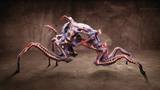


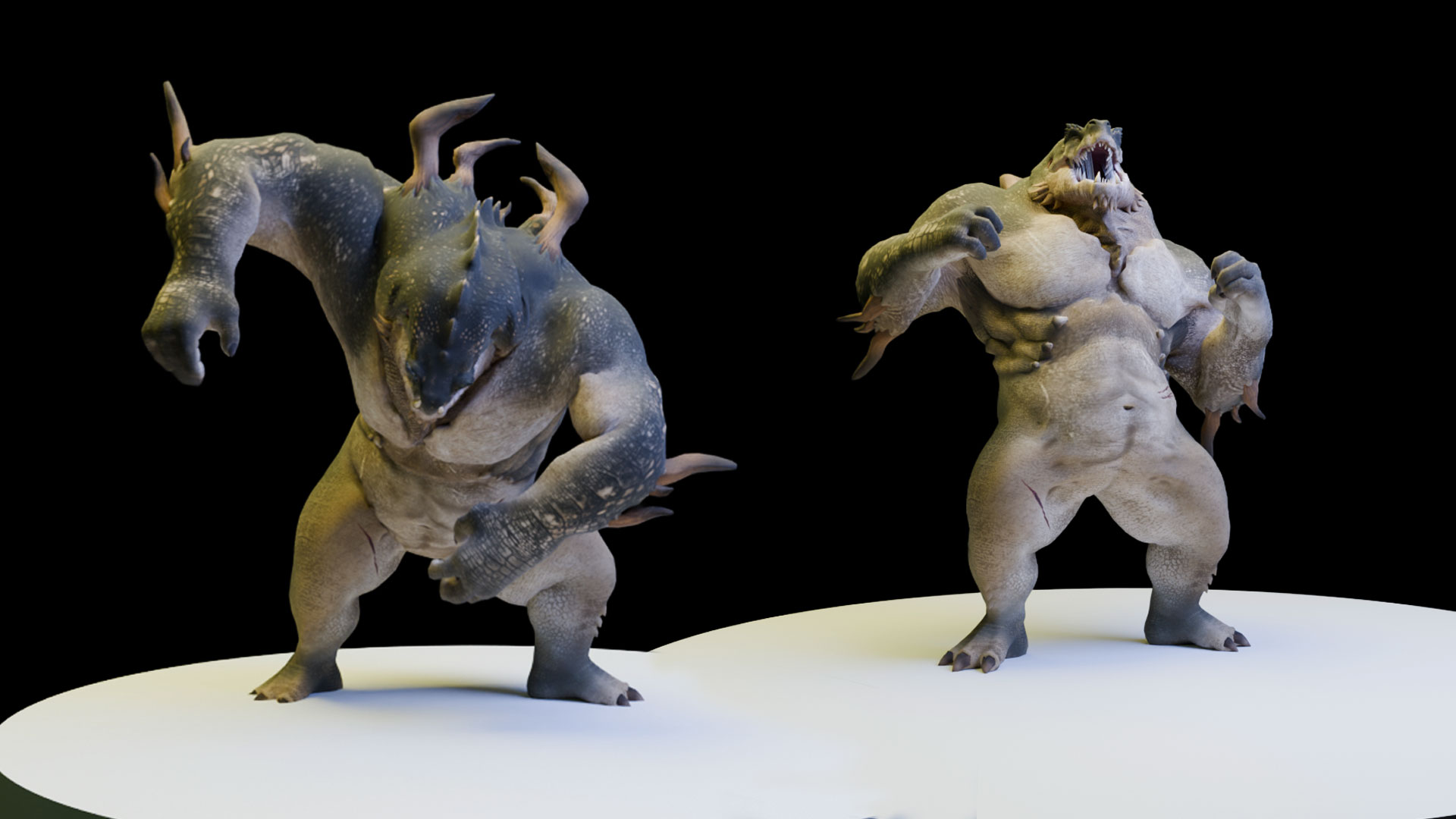


The creature fights back. Volume 2 picks up where Volume 1 left off: same creature, same rig, same weight, but this time, Ali Pournassari shows how to build a full combat animation set, including two attacks, a pain reaction, and death.
Working with motion capture in Maya, Ali shows how every animation is taken from raw mocap data through retargeting, Graph Editor cleanup, blocking, breakdown, and polish. He explains the thinking behind every decision made throughout the process. Ali stresses that the goal isn't always to create the most beautiful animation; it's to build a system that works, feels responsive, and gives the player the highest level of feedback. Game animation always lands better when well-crafted animation meets responsiveness, so artists should keep that balance in mind throughout this 5-hour workshop.
Starting with the attack, Ali demonstrates how to take rough motion capture and polish it as far as time allows. From there, he moves into animating the pain reaction, which he says is one of the most satisfying animations to get right. This animation clearly signals to the player that their effort and strategy are paying off. He then finishes the Maya section with a death animation, the final reward. When this is done well, death gives the player a genuine moment to appreciate the encounter they just survived.
As the final step, Ali moves everything built in Maya into Unity. This is not intended as a deep dive into engine work, but offers a way for artists to review animations in a real 3D space and get an honest sense of how the character behaves and feels in an actual game environment.
This workshop is aimed at animators with a foundation in Maya and some character animation experience. Completing Volume 1 is strongly recommended, as this second volume builds directly on the movement set previously established. By completing both workshops, artists will have a complete boss-combat set built to production standards, a clear understanding of how combat animation serves gameplay, and a finished two-volume creature that goes from first breath to final collapse.
This workshop features Kiel Figgins’ 3D Dinozilla Anim Rig model.
8 Lessons
Ali Pournassari kicks off Volume 2 by gathering references and planning the full combat set before a single key is set. He looks at each animation's goal, how it serves the encounter as a whole, and he lays out a clear direction for everything he’ll build throughout this volume.
Duration: 4m 48s

In this second lesson, Ali breaks the ground slam into sections, focusing on establishing the attack's overall feel and direction. He works through the first part of the animation to get a clear sense of how it reads, and discusses how early decisions will directly inform where things progress in Attack: Part 2.
Duration: 57m 58s

In Part 2, Ali pushes the ground slam through breakdown and into a full polish pass, covering impact, follow-through, and the all-important recovery window. His goal is to take the attack as far as time allows, making sure every phase reads clearly to the player and lands at a solid, production-ready result by the end of the chapter.
Duration: 1h 8m 21s

This lesson focuses on building the pain reaction from raw mocap all the way through to a polished result. Ali covers what this animation communicates, including hit confirmation, a brief moment of vulnerability, and a return to threat. He also explains how to make it read clearly and convincingly at a gameplay distance in under a second.
Duration: 43m 51s

Ali begins the death animation by working through the kneel and the tipping point of the fall toward the ground. In this first part, he focuses on the staged collapse and how mass arrives in sequence, one body part at a time. “Fewer, bigger, slower” is the core discipline that Ali follows to make a death animation feel genuinely heavy, committed, and earned.
Duration: 56m 45s

Ali finishes the death animation in Part 2. This lesson focuses on the chest, arms, and head arriving at the ground, followed by the final settle and hold. He makes a full polish pass to make sure every beat reads as final rather than paused or interrupted. The creature's last moment is taken all the way to a complete, satisfying, and production-ready result.
Duration: 55m 27s

In this lesson, Ali takes all the animations from Volumes 1 and 2 to show them running live in Unity. The player moves around the boss while it tracks, turns, and attacks in real time. While this is not a Unity tutorial, it does offer a genuine look at how everything built comes together, feels responsive, and lands as a complete encounter inside an actual game environment.
Duration: 6m 24s

Ali closes his 2-part workshop series by looking back at everything created across both volumes, from the first idle to the final death. A moment to reflect on the craft, the thinking behind every decision, and what artists can carry forward into their own creature animation projects.
Duration: 33s

Primary tools
For this workshop you’ll need:
Skills Covered
Who’s this Workshop for?
This workshop is aimed at animators who have a working knowledge of Maya and a solid foundation in character animation. Completing Volume 1 is strongly recommended, as Volume 2 builds directly on the movement set established there. That said, anyone interested in creature or game animation will find value in the production thinking and workflow covered throughout.
Intermediate animators will benefit most from Ali’s craft-focused approach and the full pipeline from raw mocap to polished result. Experienced animators will find value in seeing how combat animation is approached from a gameplay and systems perspective — not just making something look good, but making it feel right in a real game context.
Learning Outcomes
By completing this workshop, artists will understand how to use Maya to create a full combat animation set for boss-level creatures in AAA games.
Key skills include:
- How to take raw motion capture data and shape it into a polished, production-ready combat animation
- How to approach a full-body ground slam with proper timing, impact, and recovery
- How to animate a pain reaction that confirms a hit without undermining the creature's threat
- How to build a staged death that sells the weight and mass of a large creature convincingly
- How to evaluate combat animations the way a player experiences them at gameplay distance
- How to view the animation set in Unity and see it function as a real encounter


