
 Maya
Maya ZBrush
 Houdini
 Unreal Engine
 Substance Painter
 Blender
 Nuke
Nuke Arnold
 KeyShot
 V-Ray
V-Ray Substance Designer
 Mari
Mari Marvelous Designer
 Marmoset Toolbag
 3ds Max
 3DCoat
 Redshift
 After Effects
 Faceform Wrap
 Lightroom
 OctaneRender
 SpeedTree
 Daz 3D
 Agisoft Metashape
 Fusion
 Modo
Modo RealityCapture
 Gaea
Gaea Cinema 4D
 Gravity Sketch
 Premiere
 Procreate
 Substance 3D Modeler
 Katana
 Mudbox
 Krita
Krita World Creator
 Yeti
Yeti Ziva VFX
 SketchBook
 Quixel DDO
 Mixamo
 Natron
 Quixel Bridge
 Quixel Megascans
 Adobe Medium
 Quixel Mixer
 SynthEyes
 Clip Studio Paint
 SketchUp
 Unity
Unity Gaffer
 Massive
 Materialize
 Ornatrix
 PreForm
 Corel Painter
 Moi 3D
 QuickTime
 Storyboard Pro
 TreeIt
 animBot
 ReCap
ReCap Meshmixer
 DaVinci Resolve
 World Machine
 xNormal




8 Lessons
Aaron Beck discusses his design approach, which combines a deep understanding of real-world principles with creative imagination. Discover why Aaron believes this combination leads to the most original and compelling science-fiction designs.
Duration: 23m 42s

This lesson emphasizes how the most compelling sci-fi military designs stem from an understanding of real-world function rather than pursuing arbitrary aesthetics. By studying how evolution, engineering, and physics create efficient solutions – from the anatomy of predators to military hardware – designers can create robots and weapons that feel authentic and dangerous because they visually communicate their purpose. Aaron reveals why respecting the principle that when something truly excels at its job, we intuitively recognize and appreciate its competence, making it inherently striking and cool.
Duration: 34m 59s

This lesson demonstrates the early conceptual phase of character design for production. Aaron emphasizes the importance of rapid ideation and iteration over perfectionism, showing how professional concept artists work through design problems in real-time. Learn how Aaron’s process reveals the constant balance between aesthetic appeal and functional believability that defines successful mechanical character design.
Duration: 20m 49s

In this lesson, Aaron provides insight into both the creative and professional aspects of concept design for military sci-fi vehicles. Aaron demonstrates how form follows function while maintaining visual appeal, emphasizing that good design should be striking even without dramatic lighting or action poses. He discusses how a systematic approach to client presentation and the philosophical discussion about technological timelines reveal the thoughtful methodology behind professional concept art, and how this can balance creative vision with practical considerations and client needs.
Duration: 18m 9s

This lesson demonstrates how photo-bashing, when done ethically and skillfully, can be a powerful tool for concept artists to help them achieve realistic lighting and surface details while maintaining creative originality. The key is in using photographic elements as inspiration and foundation, rather than relying on them to solve core design problems. Aaron’s emphasis on heavy modification, proper organization, and technical tool mastery reveals how this technique can enhance, rather than replace, traditional artistic skills.
Duration: 21m 33s

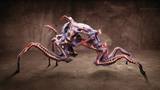
This lesson demonstrates a practical approach to concept art that prioritizes momentum and exploration over perfection. You’ll discover how Aaron’s philosophy of working quickly, while letting anatomical and mechanical forms inform each other, creates believable military robotics designs. The emphasis on research, modular thinking, and maintaining creative flow provides valuable insights into professional concept development workflows.
Duration: 19m 19s

In this lesson, Aaron provides valuable insights into professional concept art workflow, demonstrating how technical knowledge and scientific concepts can inspire creative design decisions. The instructor's approach combines practical reference gathering with imaginative applications of real-world technologies, resulting in designs that feel both fantastical and believable. His emphasis on purposeful iteration and clear goals offers important lessons for artists at any level working on complex projects.
Duration: 27m 23s

In the final lesson, Aaron showcases an effective hybrid design workflow that combines basic 3D modeling skills with strong digital painting techniques to solve complex design challenges. Aaron’s willingness to experiment with unconventional solutions and embrace their limitations while leveraging available tools demonstrates a pragmatic approach to concept design. The resulting Bipedal Assault Chassis successfully balances functional military aesthetics with distinctive character design, showing how technical constraints can drive creative innovation.
Duration: 31m 14s

Primary tools
For this workshop you’ll need:

* Note that these programs and materials will not be supplied with the course.
Skills Covered
Who’s this Workshop for?
This workshop is designed for intermediate to advanced concept artists and digital illustrators working in entertainment design. Artists with basic Photoshop knowledge and sketching fundamentals will benefit from Aaron Beck's professional techniques and industry-standard workflow approaches.
Aspiring game and film designers will gain valuable insight into modern production pipelines and client presentation methods. The lessons offer practical knowledge for artists seeking to improve their efficiency while maintaining the professional quality standards expected in competitive creative industries.
Learning Outcomes
By completing this workshop, artists gain comprehensive knowledge of professional sci-fi concept design workflows and advanced digital illustration techniques.
Key skills include:
- How to develop initial concept sketches into polished, client-ready sci-fi military robot designs.
- How to effectively combine photo-manipulation techniques with digital painting for enhanced visual impact.
- How to establish efficient workflows that balance creative quality with professional turnaround times.
- How to utilize Photoshop tools and techniques specifically for mechanical and technological concept art.
- How to present concept artwork to clients using industry-standard formatting and presentation methods.
- How to apply modern design approaches that meet current film and gaming industry expectations.


